
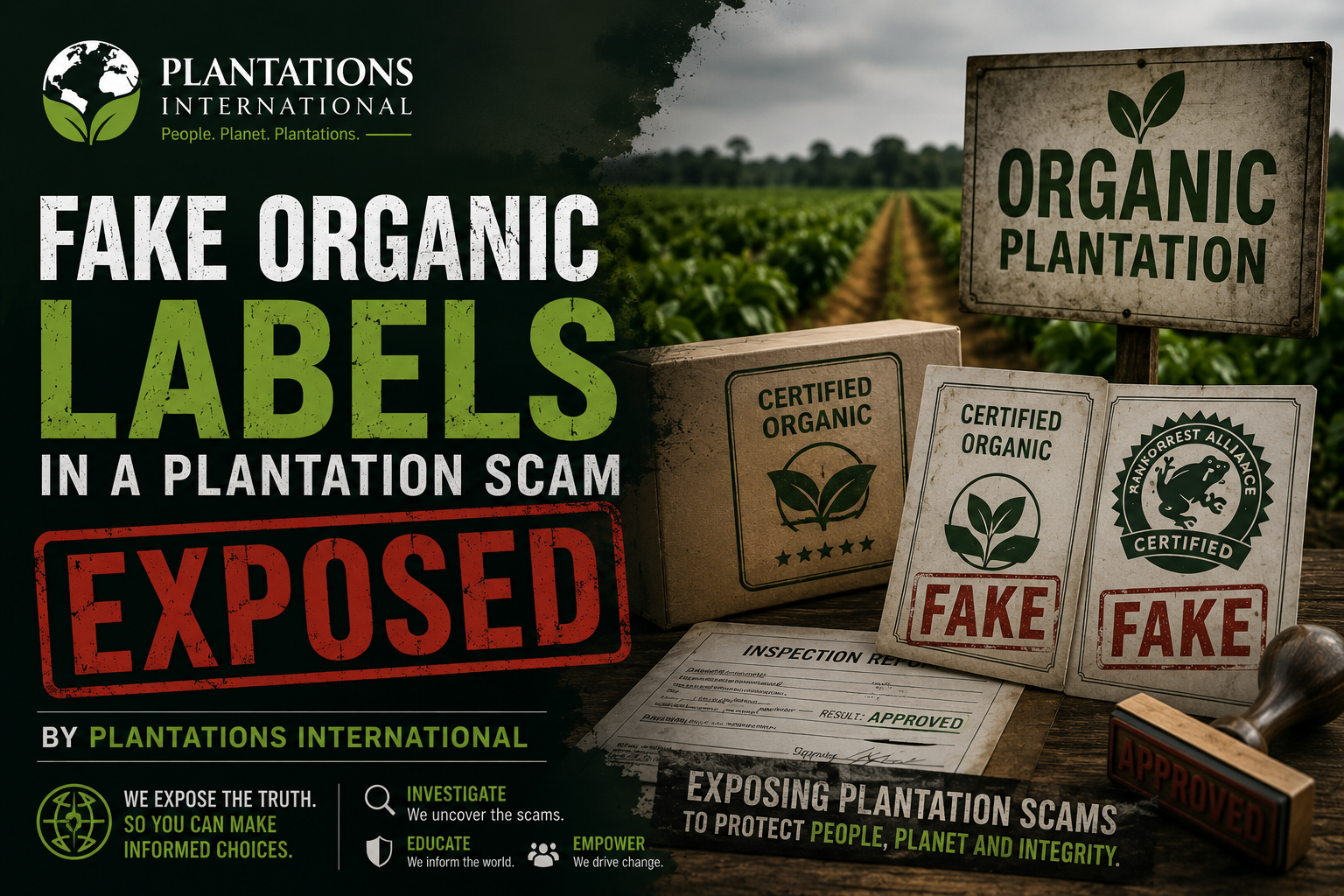
Plantations International Scam Alert takes a deep dive into how they Fake Organic Labels: The Easiest Plantation Scams to Pull Off
If you’ve been around farms or where goods are sold to other countries, you quickly realize how much difference a label makes. “Organic” on a box of mangoes or coffee almost instantly increases the price, and sometimes it’s a significant increase. This price difference is the basis for these kinds of fraudulent plantations. It’s surprisingly straightforward, and that’s why it happens so frequently.
The way it usually works is a farm won’t go through the lengthy process of becoming genuinely organic. This takes years of cleaning the soil, stopping chemical use, and many inspections – it’s difficult. Instead, they take an easy way out. They print a label they haven’t actually earned, or they obtain documentation from someone who can ‘fix’ things. And suddenly they are selling as if their product is organic. That is the central problem of these plantation frauds.
From the outside, everything appears to be in order. The boxes look correct, the paperwork appears legitimate, and the delivery happens as expected. Buyers receive the goods and assume they are genuine. For a period of time, everything works smoothly. This is what makes this sort of plantation fraud so successful, it doesn’t cause an immediate issue, it blends in.
Plantations International scam alert
However, issues begin to surface. Actual organic farmers, the ones following the rules, are negatively affected. They’ve invested time and money in reaching the required standards and may even have lost money during the changeover. Then they have to compete with cheaper, falsely labeled organic items. Eventually, customers start to doubt everything: is any of this authentic? This erosion of confidence spreads quickly and is a major consequence of these scams.
There’s another thing people don’t always consider. The workers. On these supposedly organic farms, they may still be using potent chemicals, the sort that organic standards specifically forbid. This creates a bizarre scenario: a product sold as pure and safe, while the reality on the farm is the opposite. This is another significant aspect of the fraud.
Even a small amount of fake product in the international marketplace can affect prices. When a sufficient amount of incorrectly labelled produce goes into the system, buyers begin to anticipate lower prices for “organic” items. This creates pressure on everyone. Genuine producers then have to explain why their product is more expensive, which isn’t always easy to do. And that’s how plantation scams slowly change the whole of the market.
What is disheartening is that these are avoidable. Good procedures are available – things like checks, tracking the source of goods, and laboratory analysis. If these are done properly, it’s much harder to be dishonest. But these procedures need effort and money. Without them, it’s simple for a plantation scam to happen and once a few are successful, others will copy them. Can you detect it? Sometimes. A price that is surprisingly low or poor quality compared to the description are warning signs. But it isn’t usually obvious. Those running these schemes are skilled at what they do and have improved their techniques. That’s why this type of plantation fraud is a continuing problem.
And that’s the difficulty. It seems normal when you see it. Just another delivery, another label, another sale. But behind that normal exterior is a very common plantation scam, subtly changing how people buy, sell and trust what’s on the packaging.