
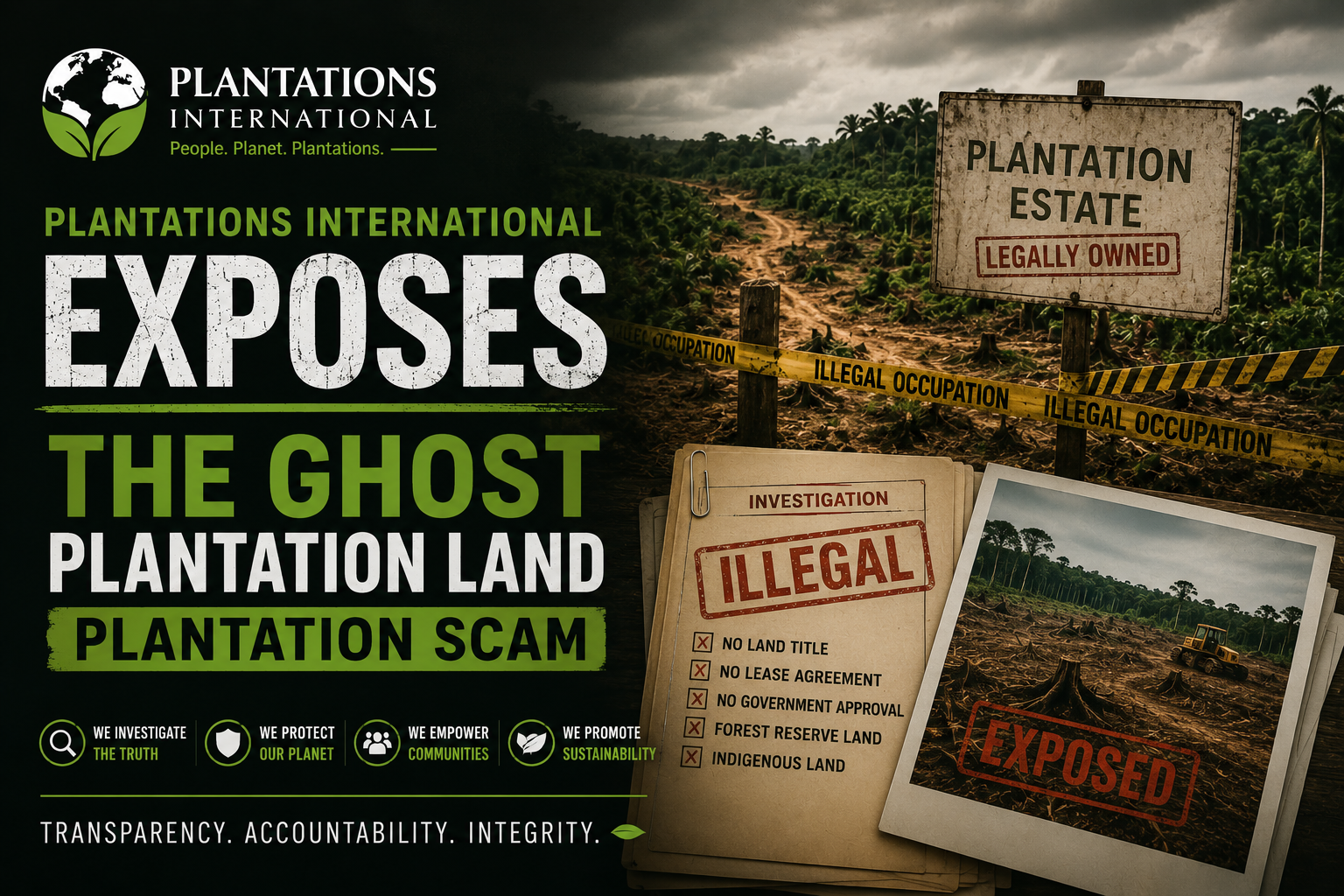
Plantations International Scam Alert Exposes the Ghost Plantation Land Plantation Scam
Some plantation scams are loud and obvious. Others sit quietly in the background for years before everything suddenly collapses. Ghost plantation land scams fall into the second category. On the surface, everything can look completely legitimate. Crops are growing. Workers are on site. Trucks are moving in and out. There may even be paperwork, maps, and lease agreements ready to show anyone who asks questions. But underneath it all, the operators never actually had the legal right to use the land in the first place.
This type of plantation scam usually starts with land that sits in a legal grey area. It may belong to the government, be protected forest reserve land, or even indigenous territory that has existed under customary ownership for generations. Instead of securing proper rights or approvals, operators simply move in and begin farming. Sometimes they gamble that nobody will notice. Other times they rely on weak enforcement, corruption, or confusion around local land records. And honestly, in certain regions, that confusion can last for years.
At first, things often seem successful. The plantation expands. Crops get planted. Buyers purchase produce believing everything is above board. Local workers take jobs because they need income and have no reason to suspect anything is wrong. That’s what makes this plantation scam so damaging. The people closest to it are often the ones with the least information.
Plantations International plantation land scam
Then reality hits. A government agency steps in. A land dispute reaches the courts. Indigenous communities challenge the occupation. Environmental investigators uncover illegal farming activity inside protected areas. And overnight, the operation can unravel. Land gets seized. Harvests are frozen. Equipment is confiscated. Sometimes entire plantations are bulldozed or abandoned.
The fallout spreads quickly. Workers lose jobs with no warning. Buyers who already committed to supply agreements are left scrambling. Export contracts collapse. In some cases, crops worth millions are simply left to rot because nobody legally controls the land anymore. This is where ghost plantation land scams become more than just a paperwork issue. They turn into social, legal, and economic disasters all at once.
There’s also an environmental side that rarely gets enough attention. Many ghost plantations are established inside forest reserves because the soil is fertile and untouched. Trees are cleared illegally. Water systems are disrupted. Wildlife habitats disappear. Then, once authorities finally intervene, the damage has already been done. A few years of profits can leave behind decades of environmental recovery work.
One reason this plantation scam continues is because land ownership records in some agricultural regions are still fragmented or outdated. Multiple claims may exist over the same property. Boundaries are poorly mapped. In remote areas, operators sometimes assume they can get away with farming first and dealing with legality later. It’s risky, but enough people have profited from it over the years that the cycle keeps repeating.
This is exactly why proper due diligence matters so much in agriculture. At Plantations International, land verification and compliance checks are treated as critical parts of plantation management. Legal ownership, land use rights, environmental approvals, and local community considerations all need to be reviewed carefully before large scale agricultural operations begin. Because once a ghost plantation land scam reaches the point of seizure or legal action, the damage is already done.
And the difficult truth is that many of these plantations look completely normal right up until the moment they collapse. That’s what makes ghost plantation land scams one of the most deceptive and destructive problems in the agricultural industry today.