
Plantations International Scam Alert Exposes the Double Harvest Reporting Plantation Scam
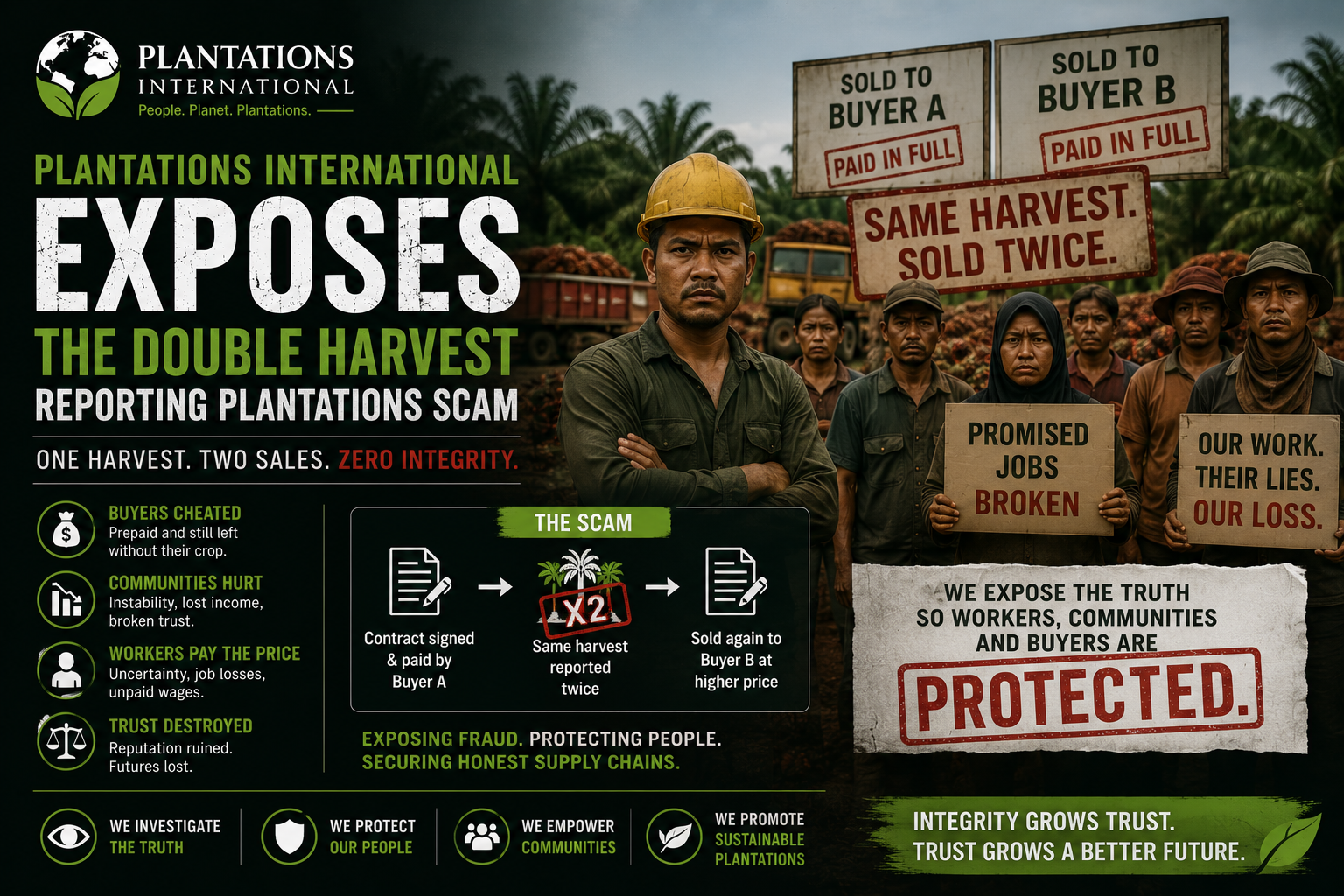
Some plantation scams are sloppy. This one is calculated. Cold. Deliberate. The double harvest reporting plantation scam is what happens when greed completely overtakes integrity and operators knowingly sell the exact same harvest twice. Not similar crops. Not future production. The same physical fruit, coffee beans, cocoa harvest, palm oil output, or timber allocation gets promised to multiple buyers at the same time.
And for a while, the scam works beautifully. That’s the disturbing part.
Here’s how it usually unfolds. A plantation signs an agreement with one buyer months before harvest. Maybe the buyer prepays for supply security. Maybe they lock in pricing early because they need guaranteed delivery. On paper, everything looks legitimate. Contracts are signed. Forecasts are issued. Harvest estimates are circulated. Everyone feels comfortable.
Then market prices rise. Suddenly the plantation realizes it can make more money selling the same crop elsewhere at current spot market prices. Instead of honoring the original agreement, they quietly make a second deal behind closed doors. Same harvest. Same fields. Same production. Sold twice.
That’s where this plantation scam turns vicious. Because now the plantation is effectively gambling with other people’s businesses.
Harvest season arrives and reality starts crashing into the paperwork. One buyer gets partial delivery. Another gets delayed shipments. Excuses begin pouring out. Bad weather. Labor shortages. Transportation issues. Unexpected disease pressure. Containers stuck at port. There’s always a story ready. Always something to buy time while operators scramble to cover the hole they created themselves.
How does the Double Harvest Reporting Plantation Scam work?
But math doesn’t lie. If a plantation only produces 5,000 metric tons of mangoes, it cannot deliver 8,000 metric tons no matter how polished the emails sound. Eventually someone gets burned. Sometimes both buyers do.
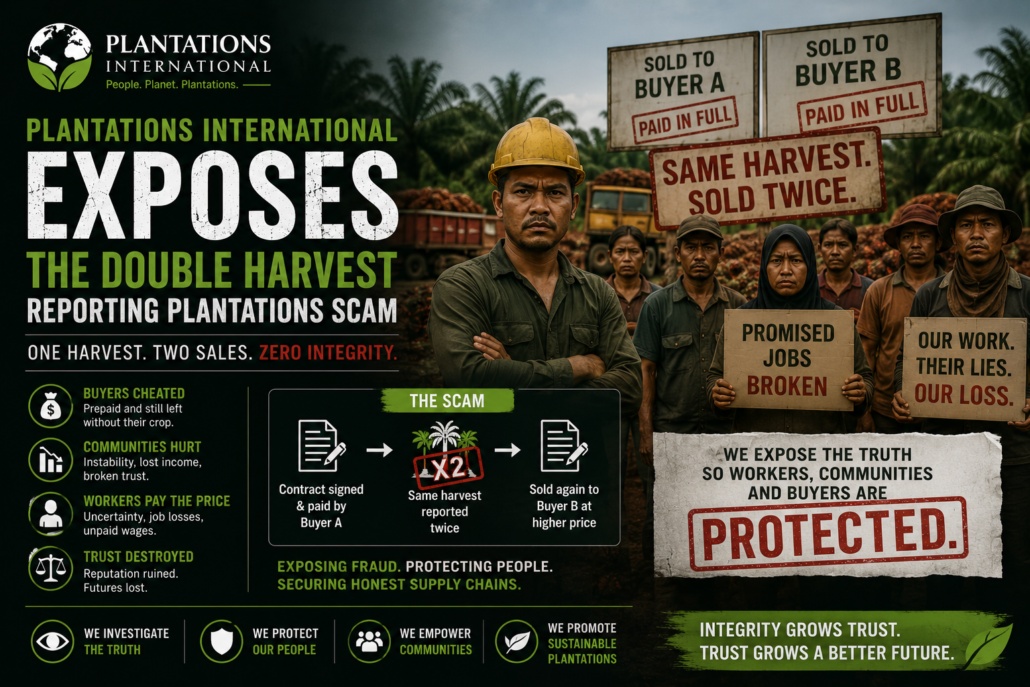
Plantations International-double harvest plantation scam
And the consequences spread fast. Food distributors can lose supermarket contracts because promised supply never arrives. Exporters miss shipping windows. Factories relying on raw agricultural materials are forced to slow production. Entire downstream businesses suddenly find themselves explaining empty shelves and broken commitments to their own customers. All because somebody at the plantation level decided they wanted to double dip profits.
The truly ugly part is that operators running this plantation scam often know exactly what they’re doing from the beginning. This is not poor forecasting. It’s not an honest mistake. It’s intentional overcommitment built around the assumption that they can somehow manipulate timing, pressure one buyer into delays, or use future harvests to patch current shortages. It becomes a dangerous shell game where operators keep shifting obligations around until the whole thing collapses.
And collapse does happen. Reputations get destroyed almost overnight in agriculture. Buyers talk. Traders talk. Shipping companies talk. Once a plantation becomes known for double harvest reporting, trust evaporates quickly. Nobody wants to wire deposits or commit logistics capacity to operators who treat contracts like optional suggestions.
Workers often suffer too, even though they had nothing to do with the fraud. When disputes escalate, harvest operations slow down, payroll becomes unstable, and local communities depending on plantation income suddenly get dragged into financial chaos they never created. One greedy decision at management level can ripple through an entire region.
What makes this plantation scam especially dangerous is how hard it can be to spot early. From the outside, everything appears normal. The plantation may even look successful. Nice offices. Healthy crops. Professional documentation. But behind the scenes, the same harvest is quietly being sold over and over again to whoever offers the best price.
This is why transparency and traceability matter so much in modern agriculture. Real production reporting, audited harvest forecasts, verified inventory systems, and independent oversight all reduce the risk of double harvest reporting scams taking root. Without those controls, the temptation becomes enormous, especially during periods when commodity prices spike sharply.
At Plantations International, operational accountability is treated seriously because agricultural supply chains depend entirely on trust. Buyers need confidence that the harvest they secured actually exists and hasn’t secretly been promised elsewhere behind closed doors. Clear reporting systems, production verification, and transparent allocation processes help prevent exactly this type of plantation scam from developing.
Because once double harvest reporting starts, the damage rarely stays contained. It spreads through contracts, supply chains, workers, exporters, and entire markets. And by the time the truth fully surfaces, somebody is always left holding an empty contract for crops that were already sold to someone else long ago.